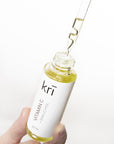
Kalahari melon seed oil is a remarkably lightweight botanical oil with a silky, dry feel that makes it particularly well suited to facial skincare.
Pressed from the seeds of the Kalahari melon, Citrullus lanatus, it is naturally rich in unsaturated fatty acids, including linoleic acid, as well as tocopherols and other naturally occurring plant compounds.
For us, its appeal is simple: it gives an oil-based formula a beautiful lightweight texture while providing the conditioning and antioxidant properties we look for in a facial oil.
What is Kalahari melon seed oil?
Kalahari melon seed oil comes from the seeds of the Kalahari melon, a variety of watermelon native to southern Africa.
The seeds produce an oil with a high proportion of unsaturated fatty acids, particularly linoleic acid. It also naturally contains tocopherols, forms of vitamin E with antioxidant properties.
Its fatty acid profile and light texture make it an interesting ingredient for facial skincare, particularly in formulations where we want the benefits of an oil without a heavy or greasy finish.
What does Kalahari melon seed oil do for skin?
It helps soften and condition the skin
Like other well-chosen plant oils, Kalahari melon seed oil is an emollient. It helps soften the skin and improve the way it feels, leaving it smoother and more supple.
Its relatively light texture makes it particularly pleasant for facial products that are designed to absorb easily rather than leave a rich layer on the skin.
It provides antioxidant support
Kalahari melon seed oil naturally contains tocopherols, forms of vitamin E with antioxidant properties.
Antioxidants are useful in skincare because oxidative stress is one of the factors associated with visible skin ageing. We therefore value ingredients that can contribute antioxidant properties as part of a broader skincare formula.
The oil is not used as a substitute for a dedicated antioxidant active. Rather, it is one of the reasons we find this particular botanical oil so interesting.
It is naturally rich in linoleic acid
Linoleic acid is an essential omega-6 fatty acid naturally found in the skin and an important component of the skin's lipid barrier.
Kalahari melon seed oil is naturally high in linoleic acid, which contributes to its distinctive fatty acid profile.
This is particularly relevant when choosing a facial oil: different oils have different fatty acid compositions, and those differences influence both their characteristics and how they feel on the skin.
It has a lightweight, elegant texture
This is perhaps the quality you notice first.
Kalahari melon seed oil has a light, silky feel and absorbs readily into the skin without the heavy finish associated with some richer facial oils.
That makes it particularly useful in serums and facial oils designed for everyday use, including combination and oily skin.
Is Kalahari melon seed oil good for dry skin?
It can be. As an emollient oil, it helps soften and condition the skin, making it useful when skin feels dry, tight or lacking comfort.
However, an oil does not provide hydration in quite the same way as a humectant such as glycerin or hyaluronic acid. Its role is primarily to soften the skin and help reduce the sensation of dryness while supporting the overall feel of a moisturising routine.
This is one reason we like combining different types of ingredients rather than asking one ingredient to do everything.
Is Kalahari melon seed oil suitable for oily or combination skin?
Its lightweight texture makes it an appealing choice for combination and oily skin, particularly for people who enjoy using facial oils but dislike a rich or greasy finish.
The fact that an oil is lightweight does not mean it is suitable for everyone, of course. Skin is individual, and anyone prone to congestion should introduce a new facial oil gradually and see how their skin responds.
But there is no reason to assume that oily skin cannot benefit from an appropriately formulated facial oil.
Why is Kalahari melon seed oil used in skincare?
There are plenty of plant oils available, so why choose this one?
For us, it comes down to the combination of its fatty acid profile, naturally occurring antioxidants and elegant skin feel.
It allows us to formulate an oil-based serum that feels light and comfortable while still giving the skin the conditioning benefits of a facial oil.
That balance is particularly useful in our Bakuchiol Antioxidant Serum, where we want the formula to feel like a treatment without becoming heavy.
Kalahari melon seed oil in Krī
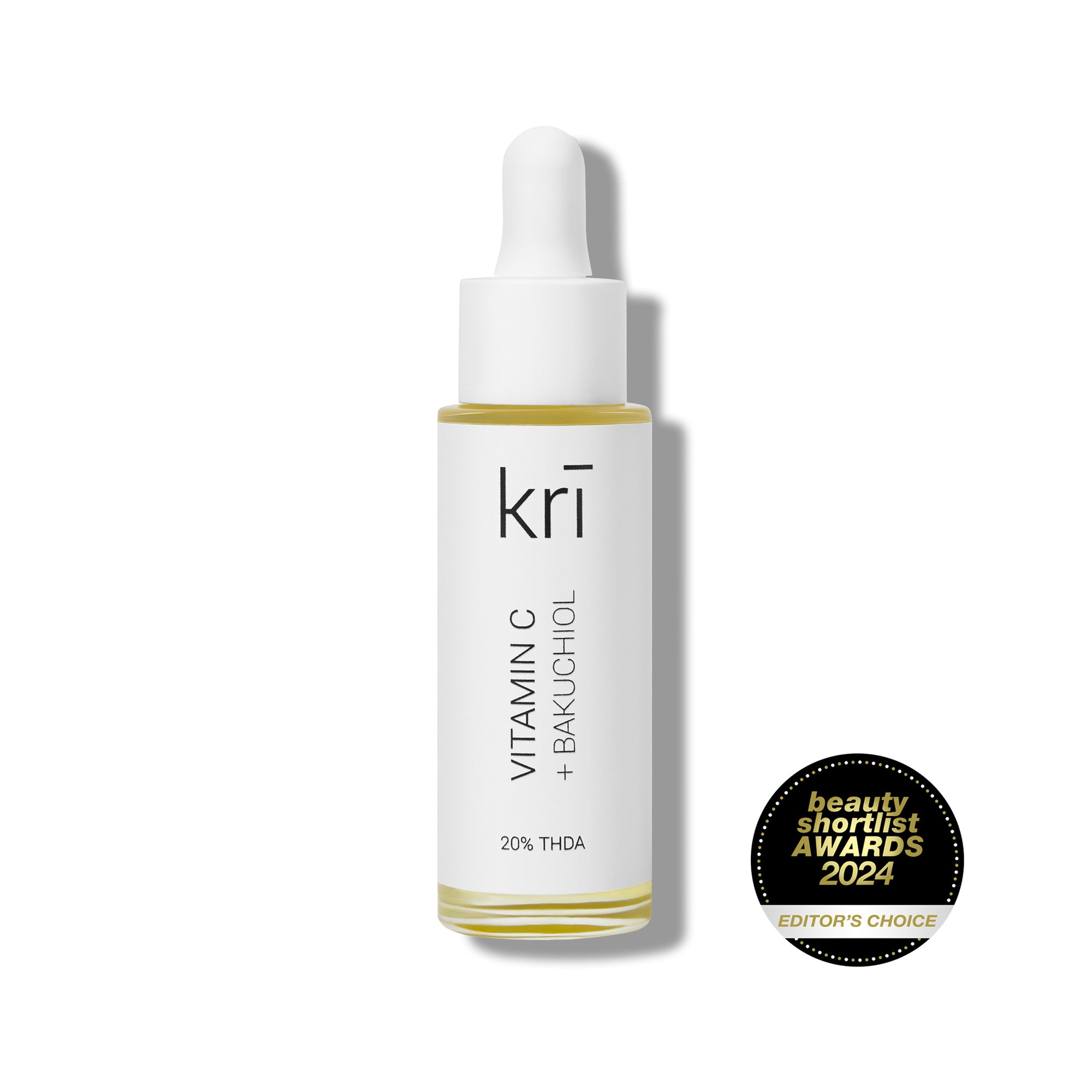
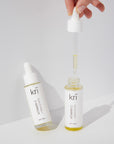
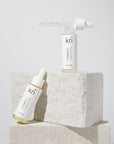
We use Kalahari melon seed oil as the carrier oil in our Vitamin C + Bakuchiol Serum. The oil provides a lightweight base while leaving skin feeling soft, smooth and comfortable.
It is also a useful example of our approach to formulation. We don't add ingredients simply to make a longer INCI list. We choose them because they have a purpose.
Kalahari melon seed oil vs other facial oils
There is no single “best” facial oil. Different oils have different fatty acid profiles, textures and characteristics.
What makes Kalahari melon seed oil particularly interesting is its combination of a high linoleic acid content, naturally occurring tocopherols and lightweight texture.
For someone who enjoys a facial oil but doesn't want something rich or heavy, it can be an excellent choice.