Hyaluronic acid is famous in skincare for a very straightforward reason: it helps skin hold on to water. Used well, it can leave dehydrated skin feeling softer, smoother and more comfortable without adding richness or grease.
At Krī, we use sodium hyaluronate - a salt form of hyaluronic acid - across several hydrating formulas. It is one of those ingredients that earns its place quietly, doing an important job without needing an elaborate story around it.
What is hyaluronic acid?
Hyaluronic acid occurs naturally throughout the body, including in the skin. In cosmetic formulas it is used as a humectant, attracting and binding water within the outer layers of the skin.
Despite its name, it is not an exfoliating acid like glycolic or salicylic acid. Its role here is hydration.
What does it do for skin?
When skin is dehydrated it can feel tight, look dull and make fine dehydration lines more obvious. Adding a humectant-rich layer can improve that feeling remarkably quickly, helping the surface look fresher and more supple.
This is useful across skin types. Dry skin can be dehydrated, but so can oily and combination skin; oil and water are different parts of the equation.
Where does it fit in an anti-ageing routine?
Hydration matters increasingly as skin becomes drier or less able to retain moisture. Hyaluronic acid is not an all-purpose anti-ageing active, but well-hydrated skin looks smoother and plumper, which is why it is such a useful supporting ingredient.
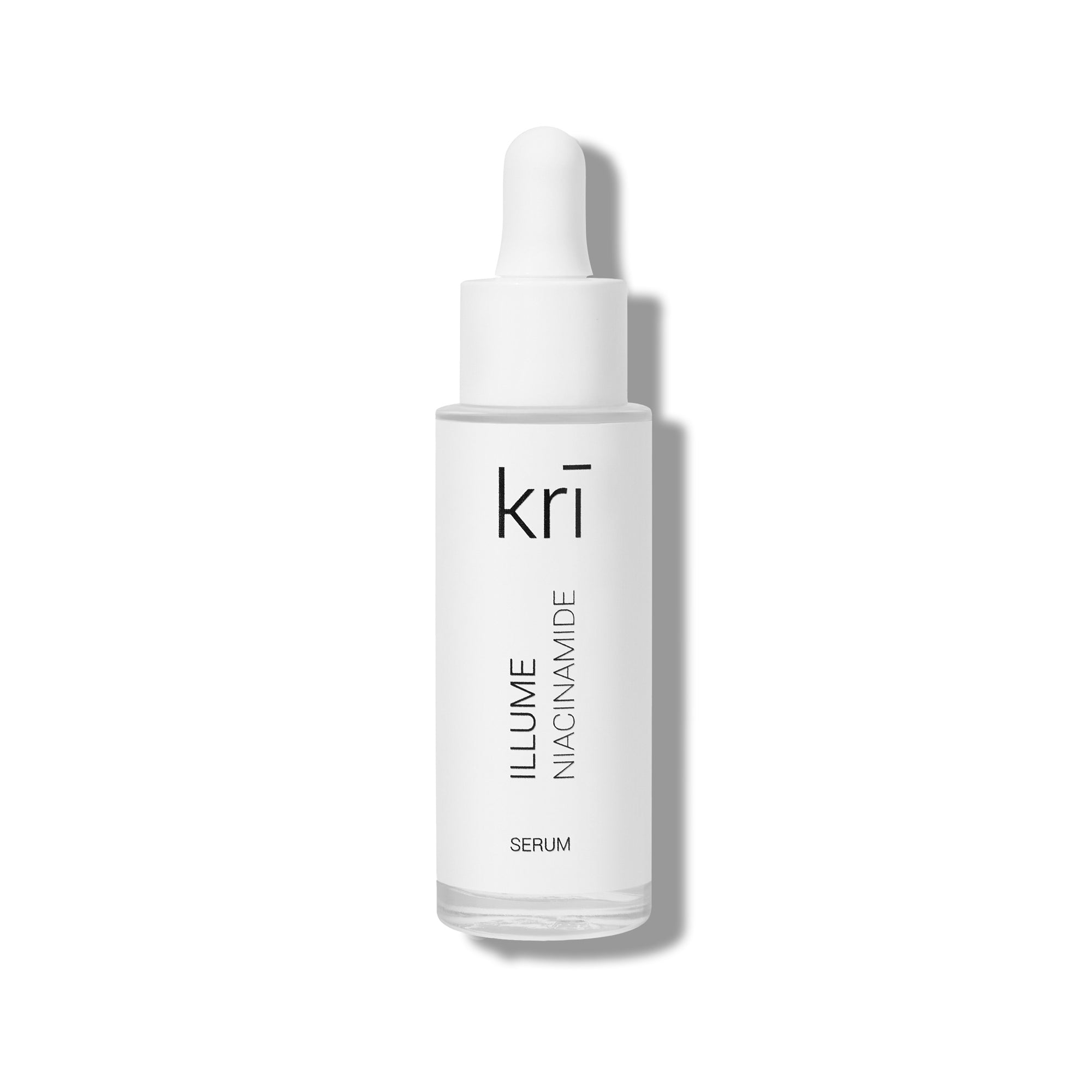
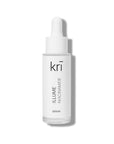
For a broader routine, Illume Niacinamide Serum combines sodium hyaluronate and glycerin with niacinamide, while Vitamin C + Bakuchiol Serum provides concentrated antioxidant care.
Dry, oily and combination skin
If your skin is dry as well as dehydrated, use a hydrating serum first and follow with a moisturiser that supplies emollience. Endless Moisturiser is the richer option when skin needs more comfort.
For oily or combination skin, a lightweight water-based layer can add hydration without a heavy finish. Illume is particularly useful here because it combines hydration with 5% niacinamide for tone, texture and barrier support.
How should you use hyaluronic acid?
Apply your water-based serum after cleansing and before moisturiser. In the morning, sunscreen remains the final step. There is no need to make the sequence more complicated than that.
Krī uses sodium hyaluronate in Illume, Hydrate Moisture Serum, Timeless and Endless. If dehydration is your main concern, Hydrate gives you a concentrated, lightweight hydration step; if you also want niacinamide, Illume does both jobs in one serum.
Hyaluronic acid vs sodium hyaluronate
You will see both names on skincare labels. Hyaluronic acid is the broader term; sodium hyaluronate is a salt form commonly used in cosmetic formulations. Different forms and molecular weights behave differently, but the finished formulation matters more than chasing a particular version on an ingredient list.
Why we use it
Good hydration is not glamorous, but it is fundamental. Sodium hyaluronate helps our formulas deliver the softness, suppleness and comfort we want from them, which is exactly why it appears across the collection.