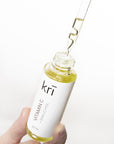
Broccoli seed oil may not be the first ingredient that comes to mind when you think about facial skincare, but it has some interesting qualities that make it particularly useful in oil-based formulations.
Pressed from the seeds of the broccoli plant, broccoli seed oil has a distinctive fatty acid profile and a naturally silky, lightweight texture. It is particularly rich in erucic acid and also contains oleic and linoleic acids, along with naturally occurring plant compounds.
At Krī, we use it for a simple reason: it gives our oil-based formulas a lightweight, elegant feel while helping to soften and condition the skin.
What is broccoli seed oil?
Broccoli seed oil is obtained from the seeds of Brassica oleracea italica, the plant species that includes broccoli.
It is a botanical oil with a high proportion of unsaturated fatty acids, including erucic, oleic and linoleic acids. Its composition gives it a particularly light, silky character compared with some of the richer oils commonly used in facial skincare.
This makes it an interesting carrier oil for serums where you want the conditioning benefits of an oil without a heavy or greasy finish.
What does broccoli seed oil do for skin?
It helps soften and condition the skin
Like other facial oils, broccoli seed oil is an emollient. It helps soften the skin and improve the way it feels, leaving it smoother and more comfortable.
Its lightweight texture makes it particularly pleasant to use in a daily facial serum.
It has a naturally silky texture
One of broccoli seed oil's most distinctive qualities is how it feels on the skin.
It spreads easily and has a smooth, silky finish that can make an oil-based serum feel considerably lighter than you might expect.
This is one reason broccoli seed oil has also attracted attention in haircare and cosmetic formulations, where a smooth, lightweight finish is desirable.
It contains naturally occurring antioxidants
Broccoli seed oil contains naturally occurring tocopherols and other plant compounds with antioxidant properties.
Antioxidants are of interest in skincare because oxidative stress is one of the factors associated with visible skin ageing.
We don't use broccoli seed oil as a substitute for a dedicated antioxidant active. Instead, its naturally occurring antioxidant compounds are one of the qualities that make it a useful ingredient within a broader formulation.
It contains a distinctive fatty acid profile
Broccoli seed oil is particularly rich in erucic acid, a monounsaturated omega-9 fatty acid. It also contains oleic and linoleic acids.
Fatty acids are important components of the skin's natural lipid barrier, and plant oils can help soften and condition the skin when applied topically.
The particular balance of fatty acids is one of the things that gives each botanical oil its individual characteristics, both in terms of how it feels and how it performs in a formulation.
Is broccoli seed oil good for dry skin?
It can be a useful choice for skin that feels dry, tight or lacking in comfort.
As an emollient, broccoli seed oil helps soften and condition the skin, making it particularly useful in an oil-based serum designed to leave the skin feeling smooth and nourished.
It is worth remembering that an oil and a hydrating ingredient do different things. Oils primarily provide emollience and conditioning, while ingredients such as glycerin and hyaluronic acid help attract and retain water.
This is why we like combining purposeful ingredients according to the role they need to play in a formula.
Is broccoli seed oil suitable for oily or combination skin?
A facial oil doesn't necessarily have to feel heavy.
Broccoli seed oil is relatively lightweight and has a dry, silky finish, making it an appealing choice for people who enjoy using an oil but don't want a rich or greasy sensation.
As with any facial oil, individual skin can respond differently, particularly if you are prone to congestion. But the texture of broccoli seed oil makes it an interesting option across a broad range of skin types.
Why do we use broccoli seed oil in our Vitamin C serum?
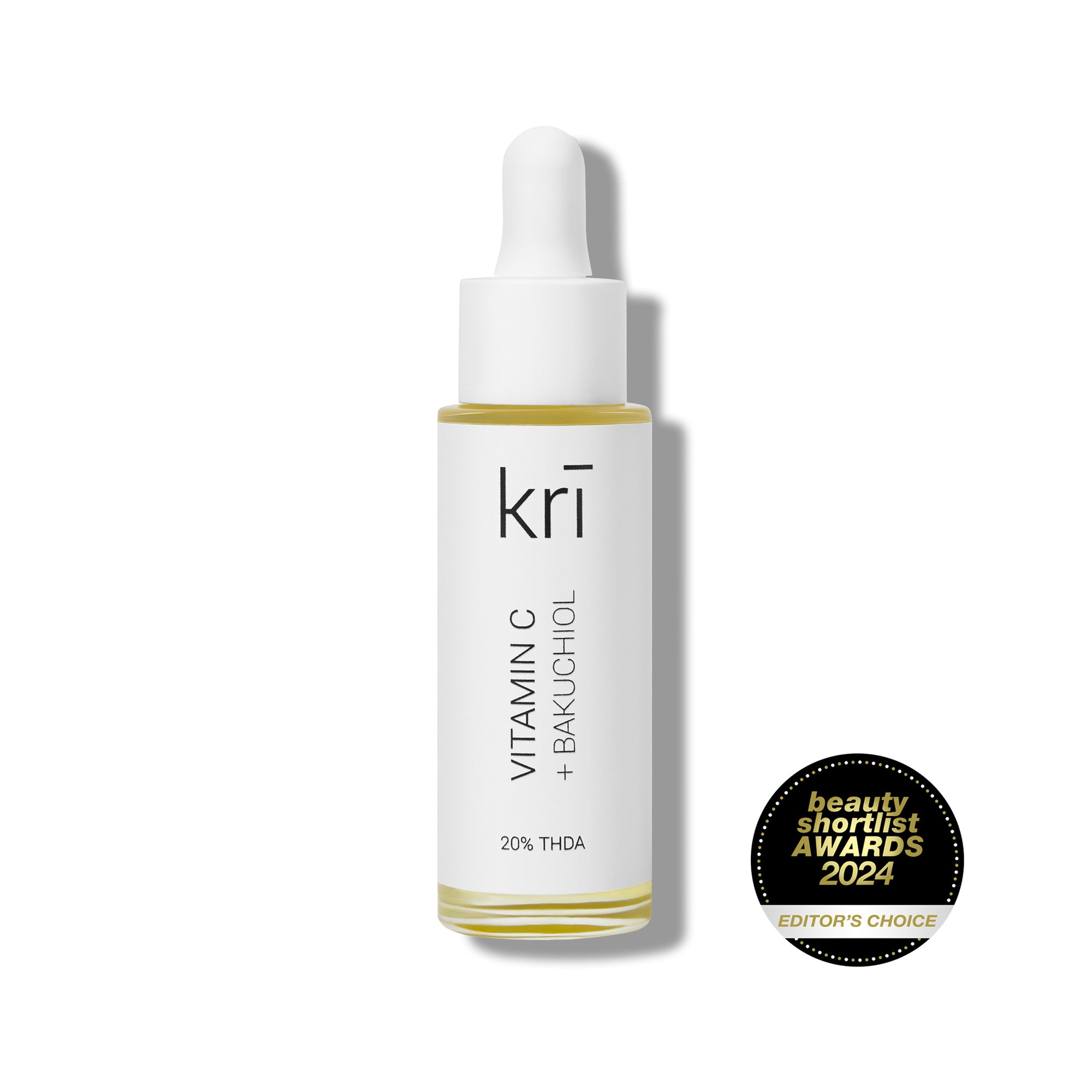
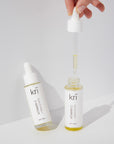
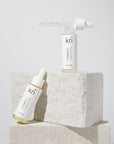
Our Vitamin C + Bakuchiol Serum is an oil-based formula, so the choice of carrier oils is important.
We combine broccoli seed oil with Kalahari melon seed oil to create a lightweight base for THDA and Bakuchiol.
The two oils bring different characteristics to the formula, but both have the light, elegant feel we want from an everyday facial serum.
Broccoli seed oil contributes its distinctive fatty acid profile and silky texture, while helping the serum spread easily and leave skin feeling soft and conditioned.
The result is an oil-based Vitamin C serum that feels more like a lightweight facial treatment than a heavy facial oil.
Broccoli seed oil and Vitamin C
Broccoli seed oil doesn't provide the same function as Vitamin C, and we don't use it as one.
Our Vitamin C active is tetrahexyldecyl ascorbate (THDA), a stable, oil-soluble form of Vitamin C.
The broccoli and Kalahari melon seed oils provide the carrier base, allowing us to create a completely oil-based formula with a silky texture and no water phase.
This is part of what makes the formulation distinctive: the oils aren't there simply to fill the bottle. They have a clear role in how the serum feels and performs.
Why we chose it
There are many botanical oils available to formulators, so every oil we use needs to earn its place.
Broccoli seed oil has a combination we find particularly useful: a distinctive fatty acid profile, naturally occurring plant compounds and an exceptionally silky, lightweight texture.
In our Vitamin C + Bakuchiol Serum, it helps create the elegant sensory experience we want while providing the conditioning benefits of a facial oil.
It's a good example of our approach to formulation: choose ingredients because they have a purpose, rather than simply making the ingredient list longer.
You can find broccoli seed oil in our